
Share this
Importing Hunger: Ghana’s Corn Crisis and the Silent Betrayal of Local Farmers
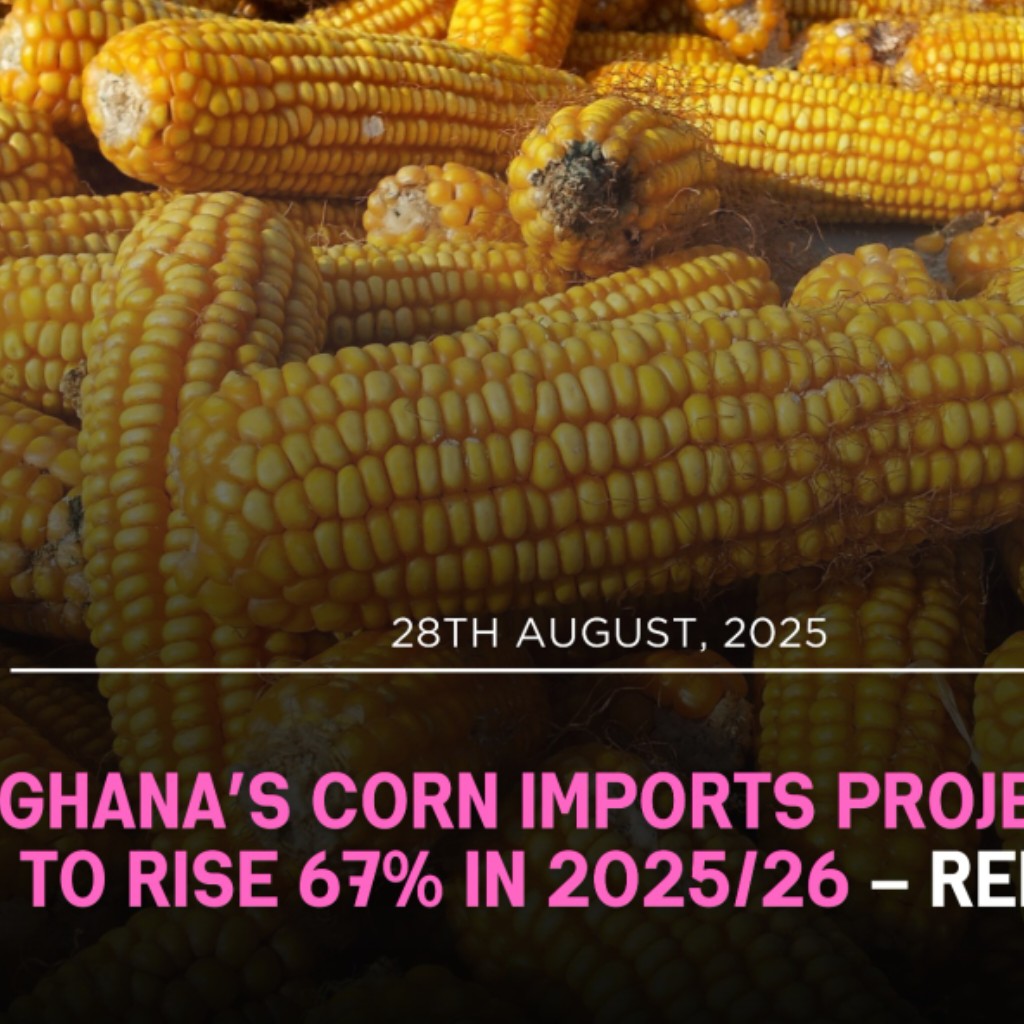
Ghana is bracing for a record 67% surge in corn imports for 2025/26—a figure that should alarm anyone who cares about food sovereignty and rural livelihoods. What looks like a lifeline for food security is, in truth, a slow-acting poison: one that could cripple local agriculture, bankrupt farmers, and lock the nation into dangerous dependency.
The contradiction is painful. Even as the government signs off on massive corn imports, thousands of farmers are still stuck with unsold grain from last season. Their maize sits in barns and on tarpaulins under the sun, rotting away not because they didn’t produce, but because there are no buyers. Imports are filling a gap, but at the expense of those who grow Ghana’s food.
Yes, the 2024 drought was brutal. Eight out of sixteen regions saw harvest areas shrink by nearly a fifth, while output dropped by 28% to 2.6 million tonnes. But instead of doubling down on farmer recovery, the state has chosen the easier path: open the ports, buy from abroad, and ignore the systemic weaknesses at home.
The numbers speak for themselves. Maize imports are forecast to hit 300,000 tonnes this season almost eleven times the normal level. Until recently, Ghana’s import dependency hovered at just 11%. This sudden leap is more than a temporary fix; it’s a policy gamble that tells farmers, “we don’t trust you to feed the nation.”
Meanwhile, contradictions abound. In 2024, the government slapped an export ban on local grain to “protect supplies.” Yet, in the same breath, it rolled out tax breaks to encourage private importers. Such mixed signals leave farmers confused, frustrated, and increasingly disillusioned.
And the human toll is clear. A national survey revealed that 15.5% of households lost part of their harvests to waste simply because demand was lacking. Unlike their American or European counterparts who can wait out bad prices with advanced silos and credit lines, Ghanaian farmers live day-to-day. Without storage facilities, they either sell at a loss or watch their crops rot while foreign grain floods in.
If this trajectory continues, Ghana risks entering a vicious cycle: low farmer incomes discourage production, reduced output “justifies” more imports, and the dependency deepens. It’s a slow unraveling of the very backbone of rural livelihoods.
But the spiral can still be stopped. Ghana does not need to choose between hunger and dependency it needs bold choices that tilt the balance back to local resilience:
Buy local first. Government must create guaranteed purchase programs to absorb unsold grain before turning to imports.
Build storage muscle. Community silos and warehouses would protect harvests from waste and give farmers leverage in the market.
Farm for the future. Irrigation, drought-tolerant seeds, and climate-smart practices can reduce the sector’s weather vulnerability.
Stabilize prices. Minimum price guarantees and commodity exchanges would give farmers certainty to keep planting.
Every imported tonne of maize isn’t just grain—it’s a message of neglect to the farmer in Ejura, Techiman, or Savelugu who toiled through drought, pests, and rising costs only to be sidelined by imports.
Ghana has been here before. Since the 1960s, the country’s agricultural output has been sliding, while dependency on foreign food has crept higher. This new surge in corn imports risks accelerating that decline into a generational crisis.
The truth is simple: Ghana can either invest in its farmers or mortgage its food future to foreign producers. The easy path is imports. The hard path is building resilience. Only one of those guarantees sovereignty.
And so the question is not whether Ghana can afford to support its farmers.
The question is whether Ghana can survive if it doesn’t.
